Steering Through the Agentic Age: A Guide for Visionary Leaders
The initial wave of AI excitement is beginning to settle, leaving many leaders wondering if the massive potential they were promised is actually real. We have seen what happens when technology moves faster than our ability to manage it, and for many, the result has been a series of experimental tools that haven't yet changed the bottom line.
Currently, many organizations are navigating what researchers call a "trough of disillusionment." This is the period where the "new toy" phase ends and the hard work of strategic integration begins. According to a recent McKinsey report, The Change Agent: Goals, Decisions, and Implications for CEOs in the Agentic Age, this period of uncertainty is actually the most critical window for strategic leadership.
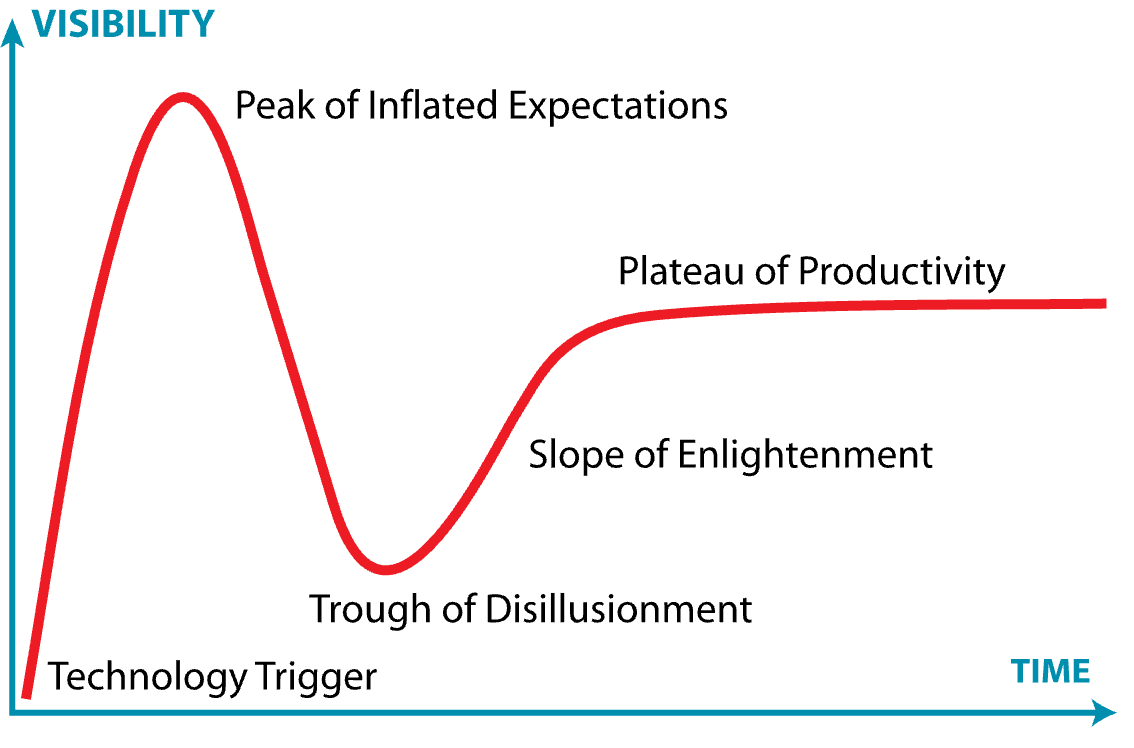
By Jeremykemp at English Wikipedia, CC BY-SA 3.0, https://commons.wikimedia.org/w/index.php?curid=10547051
While some organizations are slowing down or scaling back their investments due to these early growing pains, the report suggests that this hesitation creates a significant opening. In fact, this trough of disillusionment period is an opportunity for executives to jump ahead of their competitors. As the report highlights, "decisive and thoughtful action is the only way for leaders to strip away the uncertainty and develop agentic businesses that open new opportunities for productivity and growth."
The real value of AI isn't in automating basic tasks; it is in transformative innovation. Here is how you can use these insights to steer your organization through this shift.
1. From "Digital Labor" to Strategic Partnership
Most early AI adoption has focused on "agentic labor," which means using tools as a digital intern to handle isolated tasks like summarizing meetings or drafting emails. While these shortcuts save time, they rarely change the fundamental trajectory of an organization.
The real opportunity lies in building an "Agentic Engine." This means moving beyond the intern model and starting to use AI as a strategic advisor. For leaders of any team, whether in an educational institution, a mission-driven non-profit, or a growing business, this is about more than just efficiency. It is about having a partner that can help you stress-test a new strategy, research a complex market, or ensure that a new project stays true to your original mission. When AI understands your goals, it stops being a tool for busy work and starts being a partner in innovation.
2. The Non-Negotiable Foundation: Your "Organizational Brain"
McKinsey’s research suggests that a "wait-and-see" approach is now a high-risk move. To stay effective, leaders must build the foundation for this technology immediately.
For an AI to serve as a reliable strategic advisor, it cannot operate in a vacuum. It must be grounded in:
Mission & Core Values: AI must be aligned with your specific purpose. When the technology is trained on your values, it can act as a sounding board that ensures every suggestion moves you closer to your long-term goals.
Context & Logic: Most organizational intelligence is trapped in "tribal knowledge," the unwritten rules of how your team makes decisions. By documenting this into clear Context Profiles, you provide the AI with the "logic" it needs to provide sophisticated advice that actually fits your specific way of working.
3. Empowering Human Judgment
The most profound shift in the coming years will likely be the move toward a human-agent hybrid model. This is not about replacing the people who make your organization unique; it is about empowering them to make better decisions.
As AI takes over more of the execution and data-heavy tasks, your team can focus on what technology cannot always provide: empathy, ethics, and critical thinking. The goal is to develop "Agent Leaders," individuals who use AI to amplify their own judgment. With a customized AI advisor handling the research and initial planning, human leaders are free to focus on the high-level decisions that truly matter.
The Path Forward
The uncertainty surrounding AI should not lead to hesitation. Instead, it should drive a commitment to foundational readiness. By codifying your mission, your unique way of working, and your strategic goals today, you ensure that your organization isn't just reacting to technology, but leading it.
The Foundational Readiness Checklist
Before adding more tools, verify the strength of your foundation:
Team Training: Do the people on your team know how to use AI securely and effectively?
AI Customization: Have you customized your AI tools to know your core values and mission?
Process Documentation: Are your key decision-making workflows captured in clear, digital formats?
Strategic Fluency: Is your team prepared to supervise AI as a strategic advisor rather than just a search engine?
If you have gaps in your foundation, let’s jump them together.
Best,
Kevin