Stop Treating AI Like a Calculator (And Start Treating It Like a Chef)
We are in the early, defining moments of the AI revolution, yet I see many smart leaders stumbling over the same block. They get frustrated when AI doesn’t act like a spreadsheet.
They want AI to be Deterministic.
They need to understand that AI is Probabilistic.
Understanding this distinction is the difference between using AI to write faster emails and using AI to uncover "untapped greatness" in your organization.
Here is how to tell the difference, and why it matters for your business.
The Calculator vs. The Chef
Deterministic Computing (The Chain Restaurant)
Think of a traditional computer program like a chain restaurant. You go there because you want the exact same burger every single time.
The Goal: Consistency and precision.
The Input: A standardized recipe.
The Result: A specific, predictable outcome.
Best For: Calculating a cashflow statement. You want a single correct answer. If the answer varies, something is wrong.
Probabilistic Computing (The Chef’s Table)
Generative AI is like visiting a brilliant chef who works off daily inspiration.
The Goal: Insight and delight.
The Input: "Here are the ingredients we have today—surprise me."
The Result: You aren't 100% sure what you’ll get. It might not align perfectly with your mood, but there is a high probability it will be better than anything you could have cooked yourself.
Best For: Innovation, strategy, and creative problem-solving. You are willing to accept a little variance in exchange for a breakthrough idea.
"You Don’t Need a Weatherman..."
Bob Dylan famously wrote, "You don't need a weatherman to tell you which way the wind is blowing."
If you look out the window and see blue skies, that is a deterministic observation. You know it’s safe to walk the dog.
But if you are planning a massive four-hour hike this weekend, looking out the window isn't enough. You need a Forecast.
If the forecast says there is a 25% chance of freezing rain, that isn't a "fact"—it’s a probability. But it is incredibly useful. It allows you to:
Pack the right gear (Plan A).
Pick a different route (Plan B).
Working with AI is like dealing with a forecast. It isn't a crystal ball giving you the "One True Answer." It is a probability engine calculating the most likely, useful path forward based on the data it has.
The Google Lesson: Moving Beyond Productivity
The research is clear: The organizations getting the most out of AI aren't just using it to save time; they are using it to find opportunities they missed.
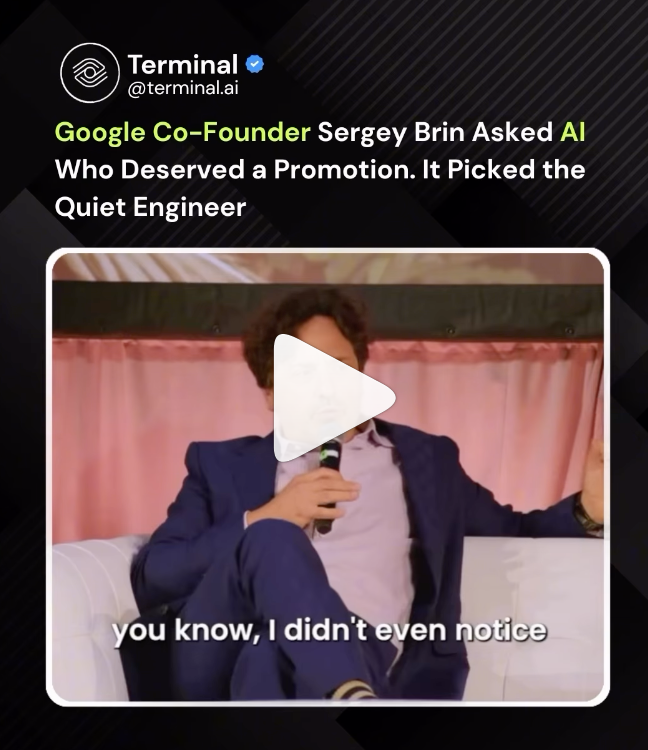
Consider the recent story about Sergey Brin (Google’s co-founder). He asked an AI model to analyze his engineering team to see who deserved a promotion.
The AI flagged an engineer who was quiet and didn't self-promote, but whose code output was outperforming her peers. The human managers had missed her because she wasn't loud. The AI "forecasted" her value based on the data.
Sergey didn't blindly obey the AI; he used his judgment to verify the insight. The result? A hidden talent was recognized, and the organization got stronger.
How to Get a Better Forecast
Just like a weather forecast gets better with more data, your AI results get better with more Context.
If you want generic advice, give generic prompts. But if you want a forecast that actually helps your business navigate the future, you need to feed the AI your:
Core Values (Trust, honesty, bias for action).
Strategic Goals.
Organizational Culture.
At GapJump AI, we call this the Context Profile. It’s how we move from "playing with chatbots" to building a highly-customized AI strategy that is aligned with your organization’s mission, goals, and values.
Go beyond looking for the perfect calculation. Start looking for the insightful forecast.
To the future,
Kevin